In vitro immunomodulatory assays are essential for early drug development by providing critical insights into immune therapeutic properties and potential immunotoxicity of novel therapeutic candidates. Through collaboration with our expert team, we are dedicated to provide high-quality, reliable, and customizable immunological testing solutions to meet the diverse needs of the scientific, pharmaceutical and biotechnology communities.
Our services encompass a wide range of immunological assay types, including enzyme-linked immunosorbent assays (ELISA), flow cytometry, cytokine profiling and cell-based assays. These assays support the evaluation of drug efficacy on innate and adaptive immunity, as well as the preclinical assessment of the safety portfolio of therapeutic drugs and natural products.
Innate Immunity
Innate Immunity is the body’s first line of defense against pathogens. It consists of a series of immediate and non-specific responses to infections or injury. Cytokines such as interferons, interleukins, tumor necrosis factor alpha (TNF-α) and various chemokines play a major role in innate immunity. These cytokines work alongside with Natural Killer (NK) cells, Mast Cells, Macrophages, Dendritic cells and other immune cells to control infections and initiate the processes that lead to the activation of adaptive immune responses.
List of Immunomodulatory Assays
1
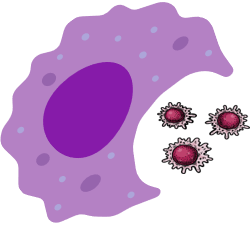
Macrophage Differentiation and Phagocytosis
CD8+ T cell and Natural Killer (NK) Cytotoxic
2
ROS/ Superoxide
Measurement
3
Cytokine Profiling
(ELISA / Flow Cytometry)
4
T-lymphocyte Proliferation
5
T cell Immunization (ELISPOT)
6
Antibody (IgG/IgM) Production
7
Adaptive Immunity
If the innate immune response is insufficient to eliminate foreign pathogens, Adaptive Immunity will be activated, such as cell-mediated immune response and humoral immune response. Cell-mediated immune response is primarily driven by T-cells. It involves the activation of cytotoxic T-cells that can directly kill infected cells, as well as helper T-cells that assist other immune cells by secreting cytokines. In contrast, the humoral immune response produces antigen-specific antibodies and is mainly controlled by B-cells. Adaptive immunity also allows the establishment of immunological memory for quicker responses to future infections.
Macrophage Phagocytic Activity
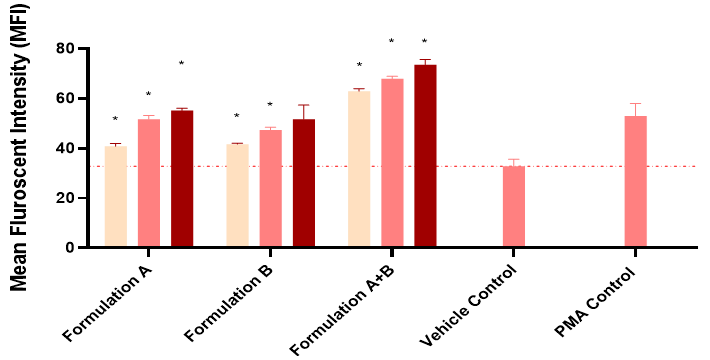
Fig 1: Phagocytic activity of macrophage using pHrodoTME. coli Bioparticles® conjugate. Differentiated human monocytic U937 cells (macrophage) were seeded in 6-well tissue culture plates at a density of 0.5 × 10⁶ cells/well. Engraftment of pHrodoTME. coli Bioparticles® conjugates were quantified using Flow Cytometry. Data expressed in Mean Fluorescent Intensity (MFI) +/- SEM of triplicate values of one experiment (p-value <0.005).
Human NK Cells Proliferation and Cytotoxic Effects
A
B
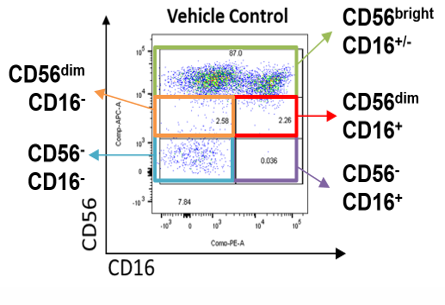
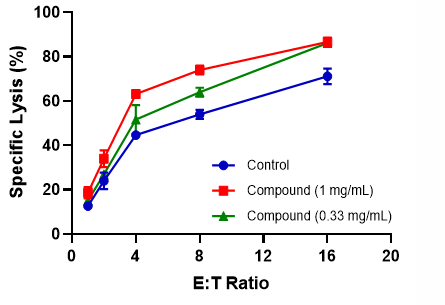
Fig 2: (A) FACS gating strategy of different NK cells subsets was used to quantify the proliferation of NK post exposure to Test Compounds. (B) NK specific killing of K562 cells. Test Compound primed NK cells were incubated with K562 cells at different E:T ratio from 0.5:1 to 16:1 for 4 hours (in triplicates) at 37°C in a 95% humidified chamber with 5% CO2. The cytotoxicity of K562 (% Specific lysis) was determined using CTG assay.
Proinflammatory Cytokines Release Assay
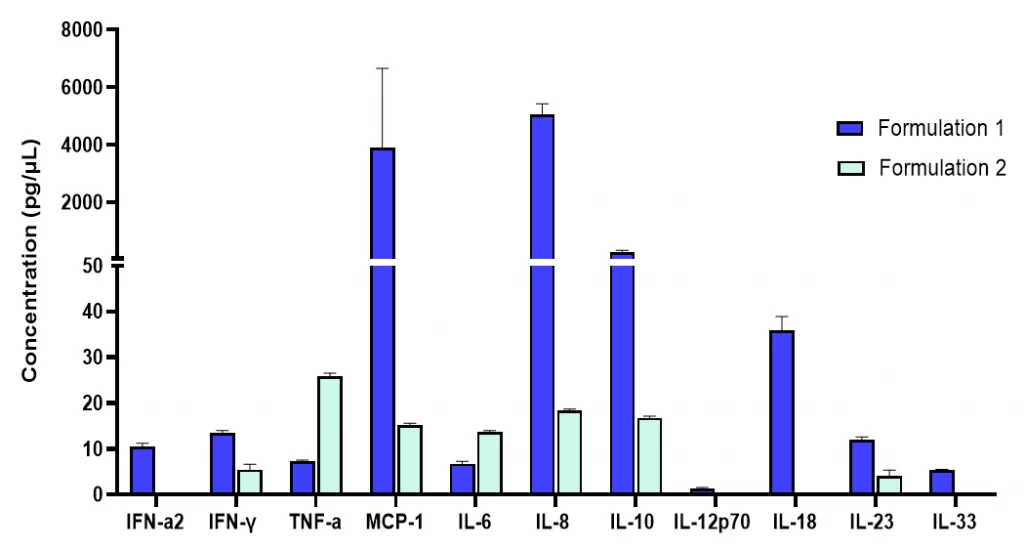
Fig 3: Pro-inflammatory cytokines release by human PBMCs were measured in response to different drug formulation stimulations.
Human PBMCs were plated in triplicate at a density of 2.5 × 10⁵ cells/well and incubated with Test Compounds for 6 hours at 37 °C. Cell culture supernatants were removed and analyzed with fluorescence bead-based multiplex cytokine assay (LEGENDplex™ Human Inflammation Panel 1) using Flow Cytometry.
Get in touch with our team.
To gain a deeper understanding of the efficacy and potential immunogenicity of your test compounds, contact our team of experts for a comprehensive immune function and safety assessment. Our in vitro assays are highly customizable to meet your specific study requirements.